
Bioengineering (BIOE) (M.S., Ph.D.)
Electrical Engineering and Computer Science (EECS) (M.S., Ph.D.)

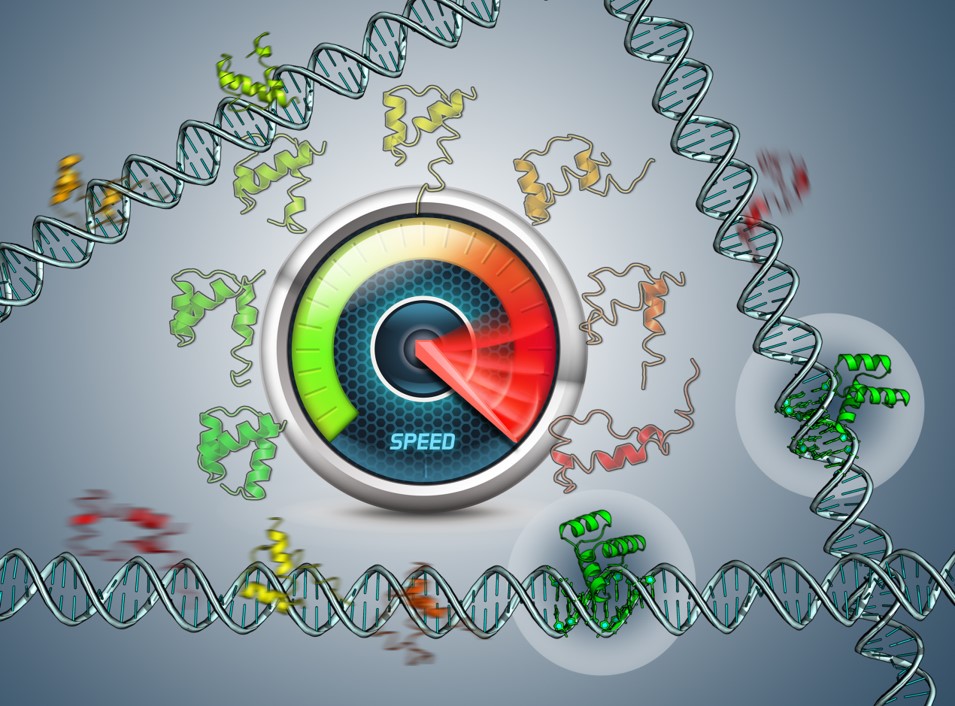
Graduate studies in Electrical Engineering and Computer Science (EECS) offer individualized, strongly research-oriented courses of study. The EECS graduate emphasis area is organized to allow students to pursue cutting-edge research in modern fields of electrical engineering and computer science, emphasizing research and preparing students for leadership positions in industrial labs, government, or academia. Master of Science (M.S.) and Doctor of Philosophy (Ph.D.) degrees with emphases in Electrical Engineering and Computer Science are offered. The EECS graduate emphasis area is highly cross-disciplinary with connections to faculty from all three schools at UC Merced. In particular, strong collaborations with the graduate programs in environmental engineering and cognitive sciences are possible.
Environmental Systems (ESYS)(M.S., Ph.D)
The Environmental Systems graduate program trains students to tackle the most challenging problems facing our planet -- water, soil, climate, energy and resources. Through understanding the Earth as an integrated system of atmosphere, hydrosphere, lithosphere and biosphere that intersects human society, ES students are uniquely poised to address critical research needs of the environment and its sustainability. Graduates are prepared for careers in academia, research, government and industry that integrate expertise from across engineering, natural sciences and social sciences.
Materials and Biomaterials Science and Engineering (MBSE)(M.S., Ph.D.)
The Materials and Biomaterials Science and Engineering (MBSE) graduate group offers a multidisciplinary research and training program for doctoral (prioritized) and master-level students at the forefront of the modern revolutions in materials science technology. We have organized our research areas into three emphases: Materials for Sustainability, Materials for Biomedicine, Materials and interfaces for Tailored Functionalities.
Mechanical Engineering (MECE)(M.S., Ph.D.)
Mechanical Engineering is dedicated to the education of a new generation of mechanicists and researchers who aim to master the fundamentals of the mechanical sciences — including disciplines such as continuum mechanics, fluid mechanics, heat and mass transfer and energy conversion — while being exposed to the forefront of research techniques, methodologies and equipment to solve problems that are relevant to modern society, such as green energy, mechanical modeling and synthesis, robotics and mechatronics, control systems and more.
Management of Innovation, Sustainability and Technology (MIST)(M.M)

The Master of Management (M.M.) 12-month program offered by MIST faculty ;will provide students with fluency in managerial thinking and practice, enhancing their readiness to fit and succeed in an organization within the private or public sector. The M.M. curriculum is designed for recent graduates looking to complement their undergraduate degree with real-world management knowledge and skills and draws on concepts from business, engineering, natural and social sciences, computing, and data analytics.The MIST Ph.D. in Management of Complex Systems (MCS) is designed to educate a new generation of management scholars with depth in analytical methods and a focus on complexity as the driving force behind issues in management of human-technology systems and in management of coupled human-natural systems.
Curriculum Topics:
- Critical thinking for decision-making in complex systems
- Technology-enabled services
- Sustainability and natural resource management
- Entrepreneurship, innovation and strategy
- Data analytics: spatial, web, networks
- Leadership, diversity and communication
Management of Complex Systems (MCS)(M.S., Ph.D.)
The MIST Ph.D. in Management of Complex Systems (MCS) is designed to educate a new generation of management scholars with depth in analytical methods and a focus on complexity as the driving force behind issues in management of human-technology systems and in management of coupled human-natural systems.The program draws upon the multidisciplinary composition of MIST faculty and the interdisciplinary spirit of UC Merced to deliver a distinctive educational experience – one that provides students the flexibility to cross-breed coursework and mentorship with other domains of engineering, science, and social science. Likewise, the program does not require prospective students to have any particular undergraduate degree.
Coursework
Required Courses
BIOE 205 (4 units), Molecular and Cell Biophysics
BIOE 210 (4 units), Advanced Bio-Thermodynamics, Bio-Kinetics and Bio-Transport
BIOE 215 (4 units), Biological Imaging and
Seminar (required)
BIOE 291 (1 unit), Bioengineering Seminar Series
Optional Courses
BIOE 230 (3 units), Computation and Modeling for Interdisciplinary Biophysical Sciences, Biomaterials and Biotechnology
BIOE 231 (3 units), Imaging and Spectroscopy for Interdisciplinary Biophysical Sciences, Biomaterials and Biotechnology
BIOE 232 (3 units), Nano and Bio Fabrication for Interdisciplinary Biophysical Sciences, Biomaterials and Biotechnology
BIOE 240 (3 units), Biomolecular Engineering
BIOE 242 (3 units), BioMEMS and Lab on Chip
BIOE 244 (3 units), Macromolecular Assemblies in Biology
BIOE 246 (3 units), Advanced Biomedical Imaging
BIOE 247 (3 units), Biomedical Imaging Reconstruction
BIOE 248 (3 units), Biomedical Optics and Biophotonics
BIOE 252 (3 units), Microgels and Carbon Cycle
BIOE 254 (3 units), Mechanics in Biology
BIOE 256 (3 units), Macromolecular Principles for Biosensor Design
BIOE 260 (3 units), Advanced Nuclear Magnetic Resonance Spectroscopy
BIOE 263 (3 units), Molecular and Cellular Cardiology
BIOE 246 (3 units), Advanced Biomedical Imaging
BIOE 247 (3 units), Biomedical Imaging Reconstruction
BIOE 248 (3 units), Biomedical Optics and Biophotonics
BIOE 252 (3 units), Microgels and Carbon Cycle
BIOE 254 (3 units), Mechanics in Biology
BIOE 256 (3 units), Macromolecular Principles for Biosensor Design
BIOE 260 (3 units), Advanced Nuclear Magnetic Resonance Spectroscopy
BIOE 263 (3 units), Molecular and Cellular Cardiology
Research Courses
BIOE 295 (varies by semester), Graduate Research
-
- Supervised research
BIOE 298 (varies by semester), Directed Group Study
-
- Group project under faculty supervision.
BIOE 299 Directed Independent Study
-
- Independent project under faculty supervision
Roadmap AM Policies & Procedures Course Descriptions Course Schedule
Courses
EECS 205 Probability and Stochastic Processes
EECS 207 Digital Image Processing
EECS 245 Parallel Computing
EECS 250 Advanced Topics in Computer Systems
EECS 252 Embedded Computer Systems
EECS 255 Advanced Human-Computer Interaction (HCI)
EECS 260 Optimization
EECS 262 Networking of Embedded Sensor Systems
EECS 263 Cloud Computing
EECS 265 Computational Geometry
EECS 267 Computer Graphics
EECS 270 Robot Algorithms
EECS 271 Theory of Computation
EECS 272 Program Verification and Model Checking
EECS 273 Computational Cognitive Neuroscience
EECS 274 Computer Vision
EECS 275 Matrix Computation
EECS 276 Machine Learning
EECS 277 Database Systems Implementation
EECS 279 Approximation Algorithms
EECS 280 Advanced Topics in Computer Networks and Distributed Systems
EECS 281 Advanced Topics in Robotics
EECS 282 Advanced Topics in Machine Learning
EECS 283 Advanced Topics in Intelligent Systems
EECS 284 Big Data Systems and Analytics
EECS 285 Advanced Topics in Motion Planning
EECS 286 Advanced Topics in Computer Vision
EECS 287 Computer Animation and Simulation
EECS 288 Advanced Topics in High Performance Computing
COGS 250 Cognitive Science Graduate Seminar
Seminar (required)
• EECS 290 Electrical Engineering and Computer Science Seminar (two semester units must be earned)
Research
EECS 295 (varies by semester), Graduate Research
-
- Supervised research
EECS 298 (varies by semester), Directed Group Study
-
- Group project under faculty supervision.
EECS 299 Directed Independent Study
-
- Independent project under faculty supervision
Courses
ES 200 (3 units), Environmental Systems
Students are expected to assume responsibility for designing his/her program in consultation with their major professor and faculty committee. In all graded 200-level courses, students must receive a letter grade of “B” or better in order to receive credit. ES 200 is included in the total units of graded courses.
Seminar (required)
ES 291(twice for credit), Environmental Systems Seminar
Research
ES 295 (varies by semester), Graduate Research
-
- Supervised research
ES 298 (varies by semester), Directed Group Study
-
- Group project under faculty supervision.
ES 299 Directed Independent Study
-
- Independent project under faculty supervision
Core Courses (required)
MBSE 210 (4 units), Structure of Materials (4 units)
MBSE 212 (4 units), Thermodynamics and Kinetics
MBSE 21X (4 units), Materials Properties
MBSE 294 (1 unit), Responsible Conduct of Research
Materials Courses
MBSE/BEST 204: Materials Kinetics and Processing
MBSE/BEST 210: Structure and Property of Materials
MBSE/BEST 214: Tissue Engineering and Design
MBSE/BEST 217: Lab on a Chip
MBSE/BEST 224 Polymeric Materials
MBSE/BEST 226: Nanodevice Fabrication
MBSE/BEST 219: Materials Simulations
MBSE/BEST 221: Mechanical Behavior of Materials
Biomaterials Courses
MBSE/BEST 211: Synthetic Biology
MBSE/BEST 214: Tissue Engineering and Design
MBSE/BEST 217: Lab on a Chip
MBSE/BEST 241: Cell-material interactions
MBSE/BEST 224 Polymeric Materials
MBSE/BEST 226: Nanodevice Fabrication
PHYS 231/BEST 231 Imaging and Spectroscopy for Interdisciplinary Biophysical Sciences, Biomaterials and Biotechnology
ENGR 170: Introduction to Electron Microscopy
Other relevant courses
CHEM 202: Bioorganic Chemistry
MATH 223: Asymptotics and Perturbation Methods
MATH 231: Numerical Solution of Differential Equations I
MATH 232: Numerical Solution of Differential Equations II
ME 221: Rheology
ME 231: Conduction Heat Transfer
ME 236: Advanced Mass Transfer
ME 261: Energy Storage
PHYS 204: Biophysics
PHYS 241: Condensed Matter Physics
PHYS 210: Electrodynamics and Optics I
PHYS 211: Electrodynamics and Optics II
QSB 202: Graduate Level Biochemistry
QSB 212: Advanced Signal Transduction and Growth Control
QSB 250: Embryos, Genes, and Development
QSB 252: Cancer Genetics and Tumor Biology
QSB 261: Human Physiology
QSB 280: Advanced Mathematical Biology
Additional Required Courses
MBSE/BEST 292 (1 unit), Group Meeting
MBSE/BEST 293 (1 unit), Journal Club
Seminar (required)
MBSE 291 Research Seminar Series (1 unit) (at least once for each year of academic residence)
Research
MBSE 295 (varies by semester), Graduate Research
Note: at least 8 units required for MS Plan I; at least 12 units required for PhD.
-
- Supervised research
MBSE 298 (varies by semester), Directed Group Study
-
- Group project under faculty supervision.
MBSE 299 Directed Independent Study
-
- Independent project under faculty supervision
Courses
ME 202 (3 units), Transport Phenomena
ME 210 (3 units), Linear Controls
ME 211 (3 units), Nonlinear Controls
ME 220 (3 units), Continuum Mechanics
ME 229 (3 units), Tribology
ME 231 (3 units), Conduction Heat Transfer
ME 232 (3 units), Convective Heat and Mass Transfer
ME 236 (4 units), Advanced Mass Transfer
ME 241(4 units), Advanced Dynamics
ME 280 (4 units),Fractional Order Mechanics
MATH 223 (4 units), Asymptotics and Perturbation Methods
MATH 231 (4 units) Numerical Solution of Differential Equations I
Seminar (required)
• ME 291(1 unit), Mechanical Engineering Seminar Series
Research
ME 295 (varies by semester), Graduate Research
-
- Supervised research
ME 298 (varies by semester), Directed Group Study
-
- Group project under faculty supervision.
ME 299 Directed Independent Study
-
- Independent project under faculty supervision
Courses (required)
MIST 252 - Foundations I
MIST 253 - Foundations II
Courses
MIST 215/ES 241 - Political Ecology
MIST 218 - Social Reality
MIST 220 - Service Science
MIST 230 - Strategy & Innovation
MIST 231 - Organizational Behavior
MIST 240 - Operations Management
MIST 241 - Information Systems
MIST 260 - Game Theory
MIST 261 - Qualitative Methods in Studying Innovation
MIST 270 - Data Science
MIST 271 - Network Science
MIST 272/ES 232 - Stochastic Modeling
ES 292 - Special Topics
ES 232 - Applied Climatology
Seminar (required)
MIST 251 Graduate Seminar
Research
295 (varies by semester), Graduate Research
Courses (required)
MIST 252 - Foundations I
MIST 253 - Foundations II
Courses
Leadership, Organizations, and Communications (Fall)
Quantitative Tools for Management (Fall)
Technology-enabled Service (Fall)
Spatial Analytics (Fall)
Strategy: Regional and Global Perspectives (Fall)
Managerial Finance and Accounting Statements (Spring)
Entrepreneurship and Innovation (Spring)
Project and Operations Management (Spring)
Law, Policy, and Risk Management (Spring)
Integrative Capstone Project (Summer)
